By late April, the urge to start fresh kicks in. Closets hit a breaking point: winter layers are shoved to the back, impulse buys are buried somewhere in the drawer and that one shirt you swore you would wear is still hanging there, judging you. Wildcat Thrift is offering a better option than stuffing clothes deeper into the closet or tossing them altogether.
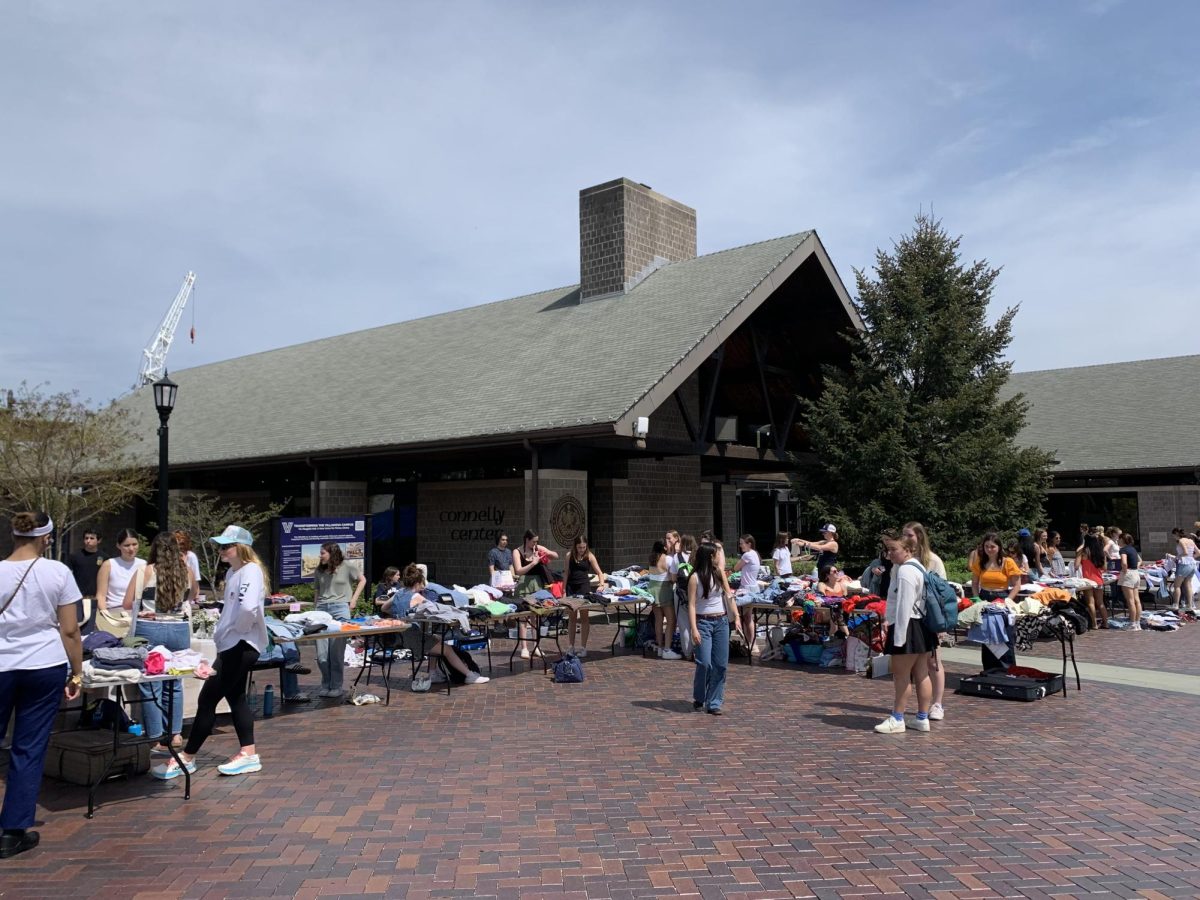
On Friday, April 24, from noon to 3 p.m., the Oreo will feature clothing, which will transform the space into a thrift hub where every rack holds a second chance. For a few hours, the walkway will become something entirely different, part community closet and part treasure hunt, where one person’s “maybe I’ll wear it someday” will turn into someone else’s new favorite outfit.
Falling during Earth Week, Wildcat Thrift will fit naturally into a time when sustainability is already at the forefront of campus conversations. The event will bring together students, faculty and organizations to sell second-hand clothing, and create an experience that feels just as social as it is purposeful.
This event is being organized by the Student Sustainability Committee (SSC), and this year’s Wildcat Thrift Chair is Senior Natalia Fernandez, an Environmental Studies and Geography major with minors in Sustainability and Economics. Having a long-standing interest in both fashion and renewability, Fernandez has been working to grow the event into something that not only gives students a new piece for their wardrobe but also a new way of thinking about what they wear and where it ends up.
“It’s about creating a circular system on campus,” Fernandez said. “Making sure things don’t go to waste and instead keep moving between people.”
The idea is simple, but impactful. Instead of sitting unused or being thrown away, pieces of clothing will be given new homes and longer lives. That small shift matters more than it seems, especially in an era of fast fashion, where clothing is produced cheaply, worn briefly and discarded even more quickly. Fernandez emphasized that much of what is thrown away does not just disappear.
“Clothing use is the second most polluting factor in the world, with around ninety percent of clothing waste being sent to landfills or incinerated,” Fernandez said.
This leaves only a small percentage of clothing that is resold through platforms like Depop or Poshmark, and the rest generates an overwhelming amount of global waste.
Wildcat Thrift will offer a more immediate alternative. While online sites are great for contributing to this circulatory system, anyone can directly sign up for a table and sell their own clothing during the event. Registration is available through a ticketing system, with one ticket reserving a table, though organizers also leave space for day-of vendors.
“Say someone is just walking by and decides they want to join [at the] last minute, we always make sure we have space for that,” Fernandez said. “We want to make it as accessible and easy for everyone to participate [as possible].”
Wildcat Thrift will also work alongside initiatives like the Villanova Free Store, selling items free of charge.
It will add a different dynamic to this event, reminding participants that not every exchange is about buying or selling, and that value can come from merely keeping things in use.
That mix of selling, swapping and simply giving away items will shape the event. Some people might come hoping to make a little money. Others could be there to support friends or fundraise for their organization, and many might stop by to see what they might find.
“Reinforcing that Villanova stays green and stays committed to that is a big part of what we’re trying to do,” Fernandez said.
As tables will fill and empty throughout the afternoon, the impact will become visible in real time. It is a small-scale system, but one that reflects a larger initiative: that what we no longer need just needs somewhere else to go.
This Earth Week, Wildcat Thrift will bring that idea into focus in a way that is possible and tangible. It will give all members of the Villanova community a way to partake in sustainability without overthinking it. And at the very least, it might give one some validation that their clothes were never the problem. They just needed the right closet.