
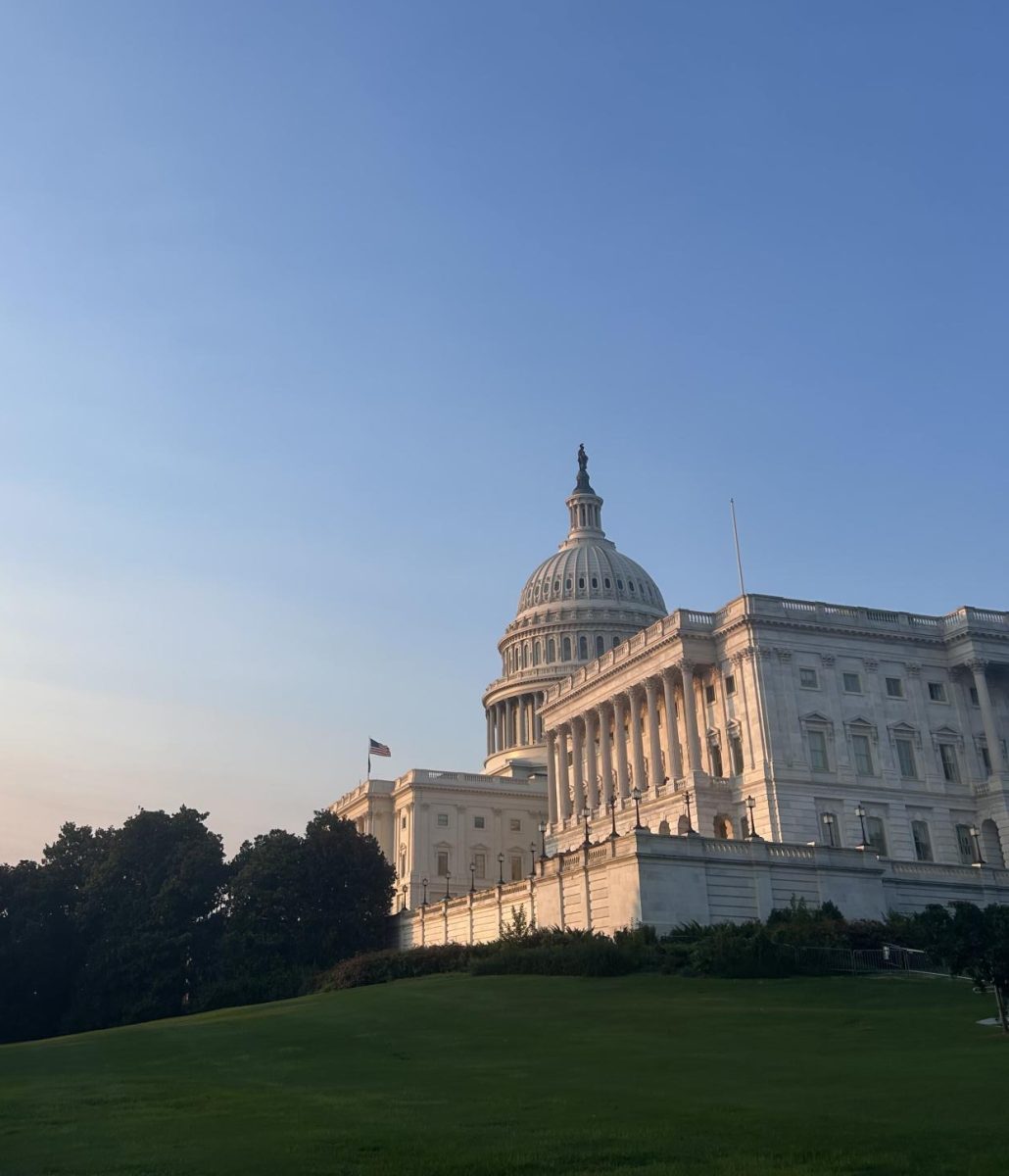
The current partial government shutdown, prolonged by continued disputes among lawmakers regarding the Department of Homeland Security (DHS), marked its 47th day today, becoming the longest shutdown of any kind in the nation’s nearly 250-year history.
While many federal agencies and departments have remained funded and operational throughout the shutdown, lawmakers have failed to approve a budget for DHS, notably impacting the Transportation Security Administration (TSA). Hoping to alleviate the significant delays in many of the nation’s major airports, President Donald Trump signed an order on Friday to fund the TSA and pay its workers, according to The New York Times.
Many spring breakers have experienced wait times of up to four hours at the security checkpoints at many airports across the country, according to AP News.
Ha Nguyen McNeill, the TSA’s deputy administrator, told NPR that officers have missed more than $1 billion in paychecks. Callout rates of TSA workers at multiple airports have topped 40%, with 11.8% of agents missing work last Thursday alone, according to DHS. Assaults against TSA officers have also increased by 500%.
“This level of disruption is unprecedented, and unacceptable, and significantly undermines the security of U.S. transportation systems,” McNeill said.
In response, Trump announced an executive action on Friday night, which would pay TSA agents from a separate pool of funds.
Trump described his rationale in a memo accompanying the executive action.
“America’s air travel system has reached its breaking point,” he wrote. “I have determined that these circumstances constitute an emergency situation compromising the Nation’s security.”
Newly sworn-in DHS Secretary Markwayne Mullin suggested a speedy turnaround for those anticipating backpay in a statement made on Friday.
“[TSA agents] should begin seeing paychecks as early as Monday,” Mullin said.
While the action promises relief for TSA agents, the greater dispute surrounding DHS funding remains unresolved. Since Immigration and Customs Enforcement (ICE) agents shot and killed two citizens in Minnesota earlier this year, Democrats in Congress have remained steadfast in their commitment to oppose a renewed budget bill for the department until the Trump administration agrees to certain regulations on ICE conduct, according to The New York Times. Among these requests was a facemask ban and new warrant requirements for ICE agents.
Negotiations about these requests and the handling of DHS more generally have remained unsuccessful, causing the government to shut down on Feb. 14.
Lawmakers clashed over competing spending plans over the weekend, failing to point to a clear end to the shutdown.
Senators unanimously passed legislation to fund most parts of DHS, notably excluding ICE, early Friday morning before taking off to their respective states for a two-week recess.
Hard-right House Republicans reacted angrily at the proposed funding bill, insisting on the importance of including funding for immigration enforcement operations.
Speaker Mike Johnson voiced his opposition to the bill in a news conference later that Friday.
“House Republicans are not going to be any part of any effort to reopen our borders or to stop immigration enforcement,” Johnson said. “This gambit that was done last night is a joke.”
While the majority members in the House proposed a continuing resolution, or C.R., of their own to fund all DHS operations, Senate Democrats, including Minority Leader Chuck Schumer, scoffed at the proposition.
“A 60-day C.R. that locks in the status quo is dead on arrival in the Senate, and Republicans know it,” Schumer said.
Further limiting the likelihood that the C.R. is voted for by the Senate is the fact that senators have already dispersed and thus cannot vote on the floor in D.C.
While a resolution to the ongoing partial government shutdown remains uncertain, TSA agents are expected to experience at least some relief, while airports only anticipate more travelers ahead of the upcoming holiday weekend.