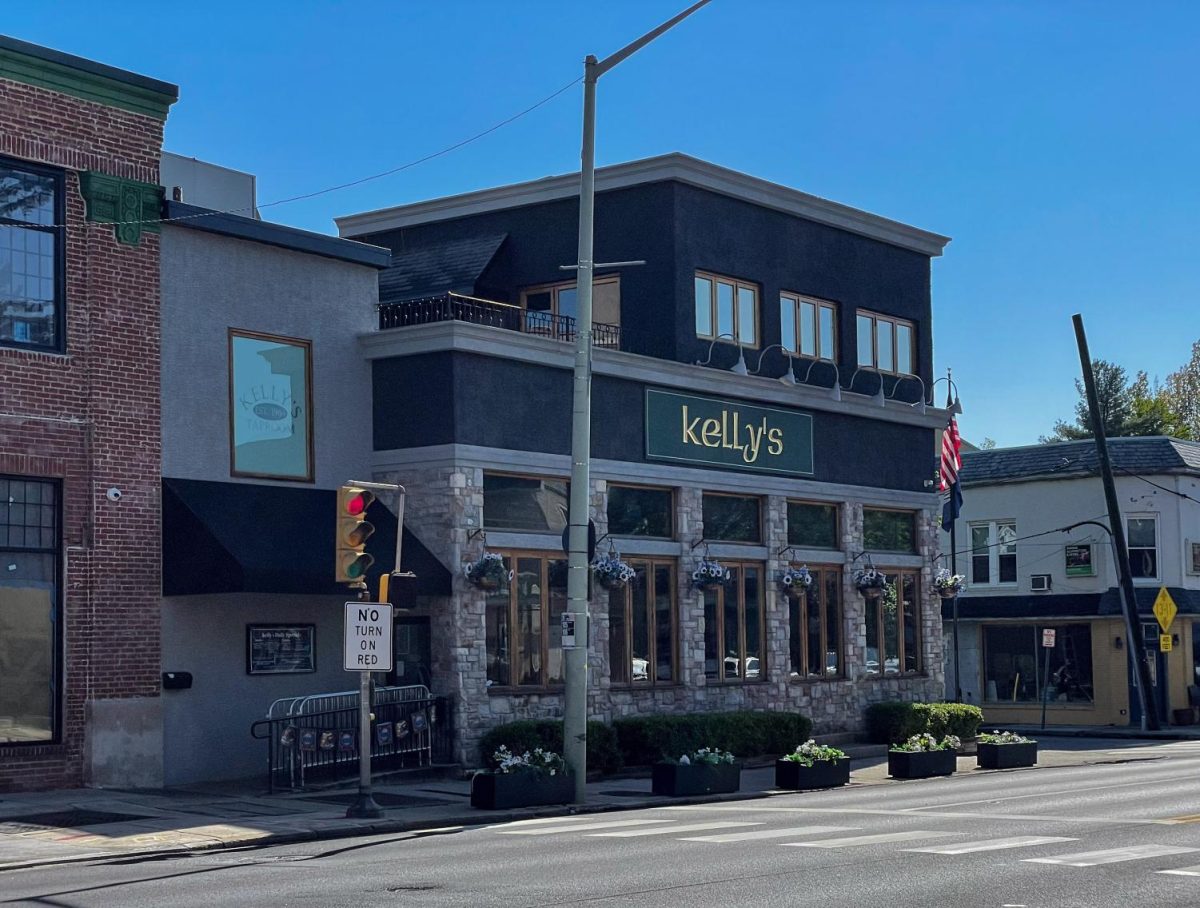
It’s a Friday night in the neighborhoods surrounding Villanova University. Music drifts from student backyards as groups head toward bars along Lancaster Avenue, while nearby residents wind down after the workweek. In these shared spaces, the lines between campus and community blur.
Villanova guarantees three years of on-campus housing for students. Some juniors choose to live off campus despite that guarantee, and many seniors do so without that option. As a result, a significant number of students live alongside residents in nearby communities and townships.
The lifestyles of college students differ from those of many of their non-student neighbors, and tensions can arise, especially when disruptions compound over time. A common issue for neighbors is the noise generated by their student neighbors, especially at night.
“There’s walking, there are people talking, that noise, and then there’s a lot of parties in close proximity with loud music,” Emily Carter, whose name has been changed at her request, said. “Even with a sound ordinance, you can have loud music until a certain time. My kids go to bed many hours before, so that can be intrusive to going to sleep.”
Carter, a resident of Bryn Mawr, has lived in the neighborhood with her husband and two young children for more than two years. Growing up in the area, Carter knew how many colleges were nearby. However, she was unaware of college student rentals on her street.
Perspectives on noise in the neighborhoods vary. Lauren Mitchell, whose name has been changed at her request, recently moved to the area with her fiancé from New York City.
“[College students] go to the bars, and I can tell when they’re heading out that way,” Mitchell said. “I don’t mind that, but I also lived in New York City, so I never slept with my windows open because there were people screaming and ambulances. On my first night living here, I couldn’t fall asleep because it was so quiet.”
Megan Hayes, whose name has been changed at her request, lives at the Plymouth Lofts, which border Kelly’s, a popular bar for Villanova students. Hayes said her Villanova student neighbors over the past three years have been respectful.
“I went to Villanova, so I kind of trust Villanova kids,” Hayes said. “Whenever I see them, even if they are drunk, they’re like the nicest people.”
Hayes said her only complaint is occasional noise, and that students have been receptive to requests to keep it down.
“I think there was one night during syllabus week where there was some craziness, and I just went out there and was like ‘Hey, guys, some of us have to go to bed and work tomorrow,’” Hayes said.
In addition to noise, parking is another source of tension between students and neighbors. In many neighborhoods around campus, residents can obtain parking permits from the townships to park on the street. Despite permits, spaces are limited, and parking can be difficult.
James Sullivan, whose name has been changed at his request, is a resident of Thomas Avenue in Bryn Mawr. He said parking is one of the biggest issues he encounters living in a neighborhood with college students.
“My biggest complaint is students park and block my driveway,” Sullivan said. “It makes it difficult to get in and out. I have been patient, but I think next year I’m going to have cars towed that block my driveway. That is really what aggravates me the most.”
Giovanna Mayo, a senior living on Thomas Avenue, said that during one of the first weeks of school, a neighbor left an anonymous note on her car because she had not pulled up far enough to leave space for another vehicle. The note said, “Welcome to the neighborhood. The fastest way to piss us off is to take two spots. Tell your friends.”
“It’s literally changed how I park,” Mayo said. “Every time I park, I will leave my car, open my door, go look in front or behind my car, and adjust it to be right on the thing.”
While noise and parking may cause tensions between students and neighbors, many students are aware of the issues and try to be good community members.
Lily Pflaum, a senior, currently lives on one side of a duplex with her roommates on Thomas Avenue. Pflaum has enjoyed living in a residential area and does what she can to be a good neighbor.
“I think the neighbors are all kind of used to seniors coming every year and living, especially on Thomas Avenue,” Pflaum said. “At the beginning of the year, people were friendly to us, and honestly, we see them less than I would think.”
Pflaum and her roommates share a wall with non-student neighbors and try to remain conscious of their noise levels as a result.
“If we are home, we are mindful of not playing music too loud or not having large groups of people over at our house for the sake of our house not getting trashed, and we also have to be mindful of people that really live here,” Pflaum said.
Students also try to respect their neighbors by sharing their phone numbers in case their gatherings become too loud.
`“Some people will stop by and introduce themselves, give me their phone numbers, so that if there is an issue with their house, I can reach out, but you can’t always tell which house is having the party,” Carter said.
In addition to student efforts, local law enforcement plays a role in maintaining peace between students and neighbors. At the beginning of each semester, the Lower Merion Police Department sends officers into neighborhoods as a part of the Community Harmony Program. They make sure the returning and new students understand what is required of them, what the community expects and what the police department expects.
Police in the area also encourage community harmony on weekends by ensuring that students walking home from the bars are not disruptive to neighbors.
“We’re in the neighborhoods just because some of the neighbors are tired of when the college students are walking to [The Villas at Bryn Mawr],” Detective John Mick said. “It’s a two-block walk, but it echoes. We try to keep the peace and make sure people keep moving.”
Villanova also plays a role in maintaining positive community relations. Hally Ammons, assistant director of government and community relations at Villanova, manages the relationship between the university and its community partners. In her role, she is responsible for neighborhood meetings, being visible in the community and letting neighbors know there is someone at the university that they can communicate with.
“A lot of what I do is about proactive communication and engaging with our neighbors in a positive way, before those issues crop up,” Ammons said.
John Delaney, conduct resolution specialist, works on student-facing efforts to strengthen community relations. Delaney participates in conversations with students and the townships and often reaches out to students directly when a complaint or issue needs to be addressed. Villanova also receives reports from local police departments, which allows Delaney to follow up when students receive citations.
One key initiative in supporting community relations is the university’s “walk-and-talk” program. The program grew out of the Lower Merion Police Department’s Community Harmony Program and has been in place for about three years.
These walk-and-talks are conducted by Ammons, Delaney and members of the Student Government Association. They typically occur once in the fall and once in the spring, especially as the temperatures rise and students spend more time outdoors. They aim to reinforce that students have rights as residents, but also responsibilities.
“If I get a complaint, it is almost always about noise or trash,” Ammons said. “So, that’s one of the messages that we try to get to our off-campus student residences.”
The university and surrounding police departments also work together to promote positive neighborhood relations by hosting events for off-campus students. On Thursday, April 16, Villanova hosted an off-campus cookout at The Villas at Bryn Mawr, known as Props, that Radnor Township police attended.
Nick Grieco, a senior living at Props, attended the event with his friends. They appreciated that university representatives were in attendance, and they also spoke with a Radnor Township police officer about expectations for living off campus.
“They had food trucks, and the Radnor Police came out,” Grieco said. “It was really nice that we just got to sit outside and have some food, and there’s been a couple of times they’ve done that this year.”
The relationship between students and neighbors seems to have improved over time. This could be credited to more students living on campus.
“In the [eight years] that I’ve been here, we’ve had more students live on campus with the opening of The Commons,” Ammons said. “So we have fewer students living out in the community than years past, so the impact on our neighbors is less than it had been 10 to 15 years ago.”
“When I first started years ago, there were a lot more, probably three times as many, college houses as today,” Mick said.
He added that conditions have improved. “It’s not as bad as it has been in the past. I think the college kids understand it. They don’t want to get a ticket because that causes havoc, and it’s a hassle to go to court and have that on your record.”
Despite certain tensions between neighbors and students, there are also positive aspects of this relationship. Ammons shared that she generally hears from community members that neighbors enjoy living near a university and students.
“[The stories] are not all negative,” Carter said. “I have a five-year-old, and he gets to watch parties happen, which in some cases is funny. He asks questions, and he wants to know why the ice cream shows up, and he’s excited that the ice cream truck is basically in front of his house.”
Delaney recently got a call from a neighbor who reached out to the Dean of Students Office to compliment her student neighbors. The neighbor said that the students shoveled her driveway and the sidewalk during the winter, which she greatly appreciated. Delaney later shared the praise with the students.
“I’d say we’re in a place now where [the relationship between students and the community] is generally positive,” Ammons said. “When we have these sort of outlier issues, they really are outliers for the most part.”
Delaney emphasized that to be positive neighbors, students living off campus need to recognize that issues that arise between students and neighbors often are due to a buildup.
“It’s really important, as a student, when you’re living next to people, you’re living in a suburban neighborhood, that you’re being good stewards for that next group of students that come up there,” Delaney said.
Students can also foster positive relationships by getting to know their neighbors and interacting with them during their time in the neighborhood.
“I believe if you have more of a connection to your neighbors, then your actions might shift,” Carter said. “You might not throw that beer bottle on the ground so that there’s broken glass everywhere because you know your neighbor.”
Living off campus is an exciting part of many Villanova students’ college experience, but these experiences also reflect the reality that student presence is experienced differently across the surrounding community. Negotiating this dynamic is an ongoing process that will continue to shape how these communities coexist.