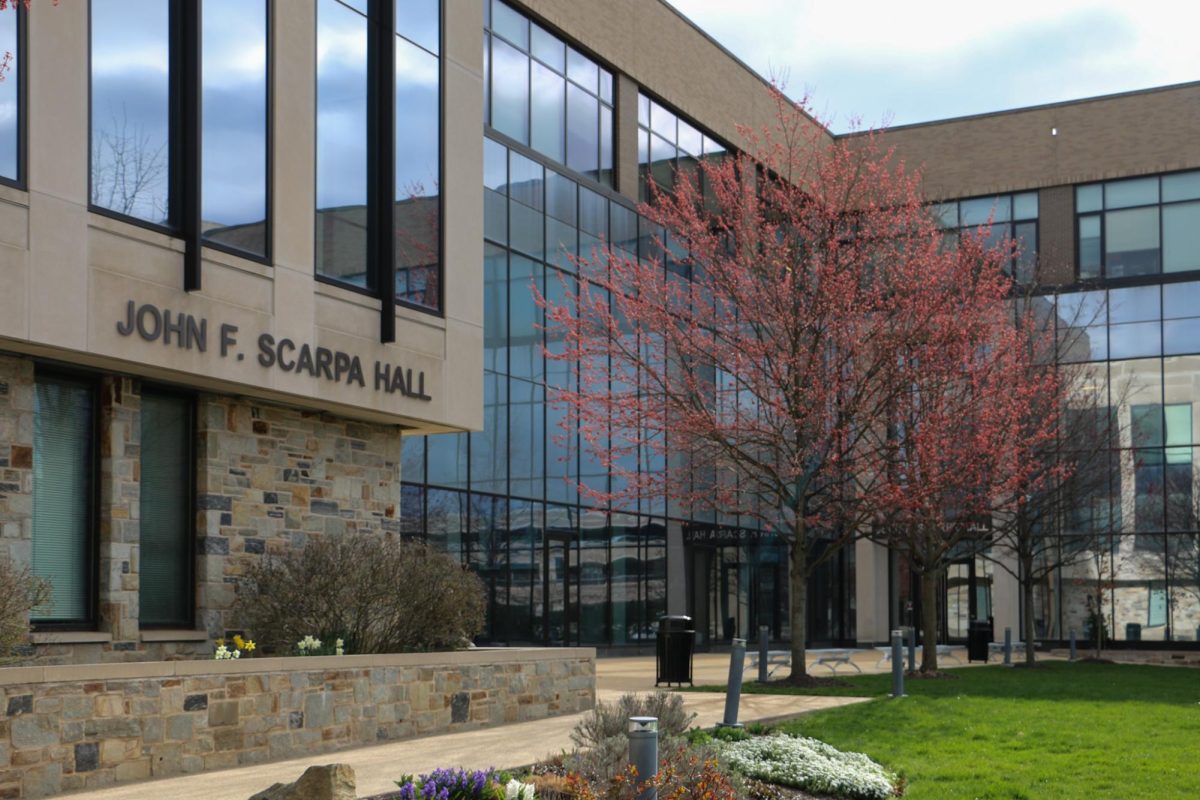
On Thursday, Feb. 19, the Latin American Studies Program held a workshop in the Charles Widger School of Law on Immigration and Customs Enforcement (ICE) in communities. The recent increase in immigration enforcement in the United States has led to discourse regarding ICE’s presence in communities, making it more important than ever to stay informed about individual rights and advocacy opportunities.
With ICE presence becoming increasingly prevalent, Student Life at Villanova University sent an email to the student body listing protocols, resources and opportunities for education in case law enforcement agencies come to campus.
Amid these developments, the workshop provided an opportunity for students to learn about their constitutional rights during ICE encounters and how to support immigrant groups through local advocacy.
The Director of the Latin American Studies Program, Raúl Diego Rivera Hernández, opened with a powerful speech about the importance of the event and the current state of the country.
“What is happening is not small, it is not isolated, and it is not temporary,” Hernandez said. “It represents a rapid expansion of federal enforcement of power happening in real time. It is whether confinement becomes an accepted tool of routine governance, and it is about the role of private corporations in incarceration and the expansion of federal authority in our neighborhoods, workplaces and schools.”
Additionally, the workshop highlighted local encounters with ICE agents. For instance, 25 workers were arrested in Bellefonte, Pennsylvania, while working on a hospital construction site. This is not an isolated instance, as deportation increased by 80% this year, compared to previous years.
“These are realities,” Hernandez said. “When families live in fear of routine activities, going to work and school, and seeking health care. With this, community life contracts and social bonds dwindle.”
Taking this into account, the workshop focused on educating participants on their constitutional rights in case of an encounter with ICE officers. They laid out a list of rights that agents cannot violate, such as entering private property without a proper warrant, the right to remain silent, the right to record interaction, and that agents must have probable cause and reasonable suspicion to make an arrest.
“Recording them is the best way to hold them accountable,” Tsehaitu Abye said. “Agents have been known to arrest now, think later.”
There is a power in numbers when pushing back against potential violations of personal and constitutional rights.
Showing support to communities impacted by ICE presence can be through conversations with others, supporting immigrant-owned businesses, donating to solidarity funds, community outreach and divesting from organizations that fund ICE operations.
Another speaker, Tammy Murphy, spoke about an “ICE Out” legislation that they are working on getting passed in Philadelphia. This legislation would prohibit data sharing, asking about immigration status, ICE entering non-public city facilities and any law enforcement organization from masking or concealing its identity.
Many efforts are underway to check the power of the federal government, but there is still a lot of rallying and support needed to help the communities that feel their lives have been disrupted by the recent developments in the country.
Ultimately, the workshop underscored the importance of education and community engagement during a time of heightened federal enforcement. By providing students with knowledge of their constitutional rights and opportunities for advocacy, the event reinforced the role universities can play in fostering informed and active citizens.
As national conversations around immigration enforcement continue to evolve, staying informed and engaged remains essential for supporting affected communities and upholding constitutional rights.