
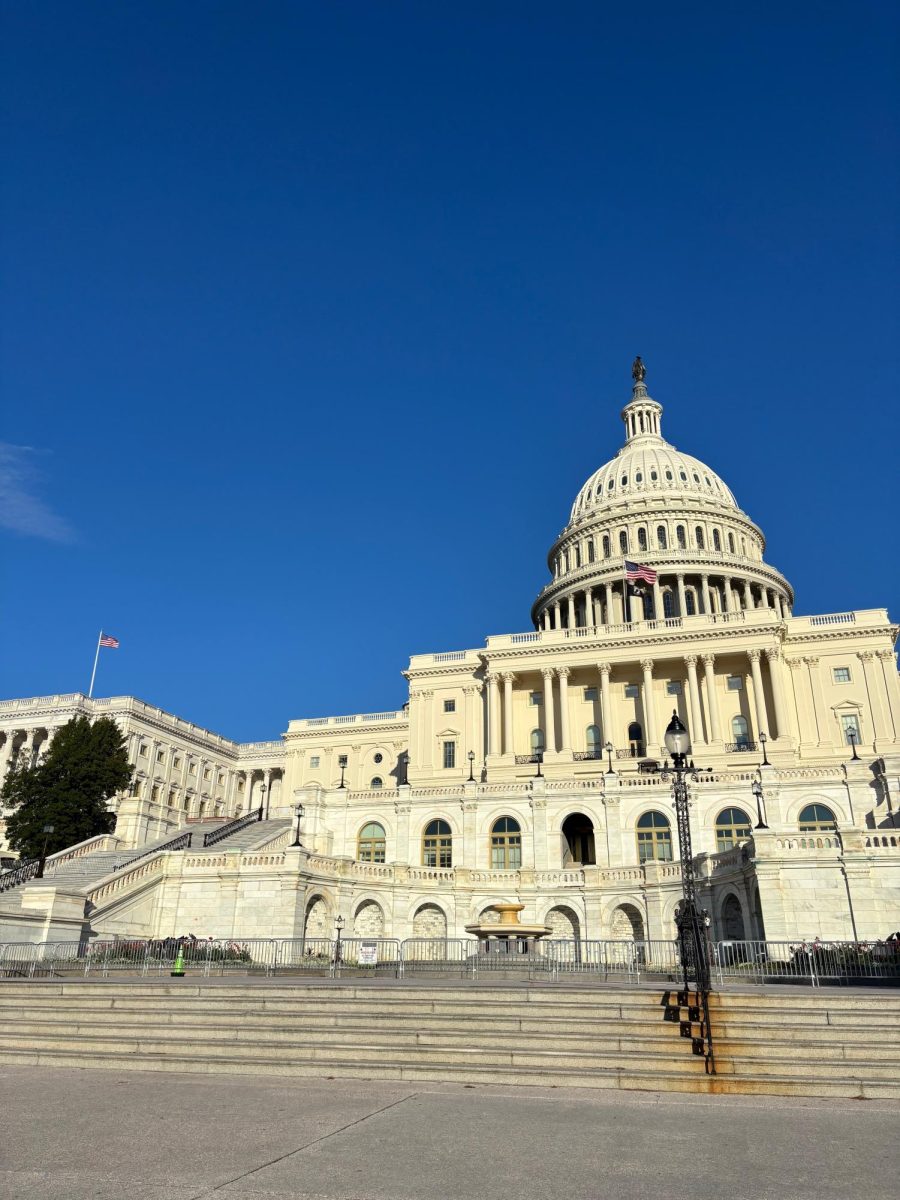
A partial government shutdown which left several federal operations temporarily unfunded ended Tuesday after a narrow vote in the House and approval from President Donald Trump, reported NPR. The four-day shutdown came just 80 days after the end of the country’s previous and longest one, which lasted nearly one and a half months.
In the U.S. government, shutdowns occur when necessary funding legislation fails to be enacted ahead of set deadlines. Without such laws in place before the expiration date of the previous fiscal year’s funding, many federal agencies, operations and programs are interrupted until members of Congress and the President pass a new budget.
Approximately two weeks ago, the House approved a large spending package that totaled nearly $1.3 trillion. The spending bill, which was then sent to the Senate for approval, outlined budgets for federal defense, health, transportation, housing and homeland security operations, according to NPR.
However, recent developments arising from the increased presence of Immigration and Customs Enforcement (ICE) agents around the country have impacted the legislative timeline for the federal budget. On Jan. 24, an ICE agent fatally shot Alex Pretti, a Minneapolis-based ICU nurse for the U.S. Department of Veterans Affairs. The event prompted several Democratic Senators to reconsider their Yea vote for the spending bill, which had allocated funds to the federal agency in which ICE is housed, the Department of Homeland Security (DHS). By expressing their disapproval of the legislation, Democrats hoped to pressure their GOP colleagues into conversations that addressed DHS’s operations and policies and that negotiated the agency’s funding.
Senator Chris Murphy (D-CT) was among those officials who disapproved of the omnibus bill, according to NPR.
“What is happening in Minnesota right now is a dystopia,” Murphy told Fox News. “ICE is making this country less safe, not more safe today.”
President Trump expressed his commitment to secure a compromise with Senators in a post to Truth Social last week.
“I am working hard with Congress to ensure that we are able to fully fund the government without delay,” President Trump wrote.
After deliberation, Senate Democrats and President Trump reached a tentative agreement that would help push the majority of funding through the chamber. A two-week continuing resolution was suggested to give congressional lawmakers an extension to negotiate policy changes and department reforms.
The move by Senators to strip DHS funding epitomizes Democratic members of Congress’s continuous objection to what they perceive to be unfettered and unlawful conduct by federal immigration agents.
Following a 71-29 Senate vote on Friday to move forward with the amended spending plan, the budget was sent back to the House to be voted on again before President Trump could sign it into law. However, the House was out of session until Monday, causing the government to enter a partial shutdown at midnight on Saturday before representatives could get back on the Floor to vote, reported The Guardian.
Statements made by House Democrats suggested that some representatives were resistant to the new funding plan. Congressman Ro Khanna (D-CA) expressed to NBC his resistance to the revised budget.
“I’m not a no– I’m a firm no,” Khanna said. “I just don’t see how in good conscience Democrats can vote for continuing ICE funding when they’re killing American citizens, when there’s no provision to repeal the tripling of the budget.”
Despite such opposition, a coalition of Republican and Democratic representatives secured a majority in the affirmative in a razor-thin 217-214 vote Tuesday afternoon, according to CBS News. President Trump signed the budget into law shortly after, putting the new budget into effect and ending the brief partial government shutdown.
With this new spending plan, lawmakers will now turn their attention to debates regarding DHS funding. Thanks to the continuing resolution previously agreed upon, members of Congress face a 10-day window to negotiate a budget for the federal agency. According to NBC, Democrats on the Hill will advocate for reforms within DHS and use their votes as leverage ahead of the Feb. 13 deadline.
Last weekend’s lapse in appropriations serves as a manifestation of the growing controversy surrounding ICE operations across the U.S. Though the partial shutdown has ended, many will continue to watch congressional lawmakers as they enter what are likely to be contentious negotiations pertaining to DHS in the coming days.