George Santayana, a famous Spanish philosopher, famously stated that “[t]hose who cannot remember the past are condemned to repeat it.”
His words suggest that history holds an important place in today’s society and bears warnings for those who will listen.
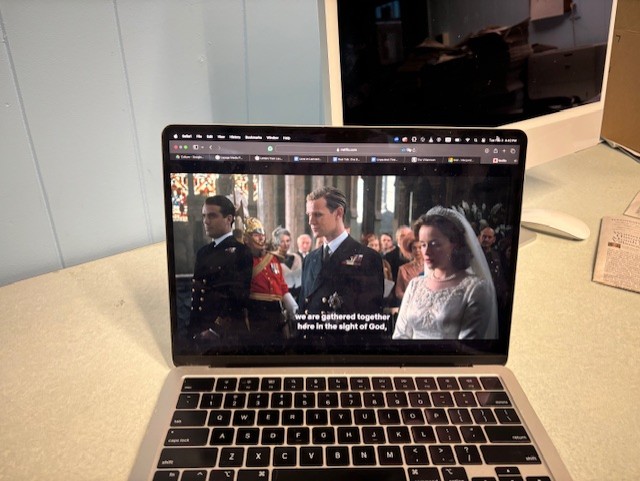
However, the way history is viewed and digested has now dramatically changed. Students gain knowledge of the past from film, TV and video games as frequently as they do from books.
On Tuesday, Jan. 2, the Albert Lepage Center for History in the Public Interest held a webinar titled “Media, Pop Culture, and History” that aimed to answer the question, “How do film, television and now video games shape our understanding of the real stories behind the screen?”
The webinar featured Peter Raleigh, PhD (Long Library), Pamela Robertson Wojcik, PhD (University of Notre Dame), Makeba Lavan, PhD (Grinnell College) and Jeremiah McCall, PhD (Cincinnati Country Day School).
Dr. Wojcik opened the discussion by presenting her research into whether and how media, especially cinema, can be influenced by of the social and political climate in which it is produced.
She addressed the concept of reflectionism, the suggestion that movies can reflect national ideas or contemporary understandings of a time. Wojcik believes the problem with this idea is that often, viewers and scholars will project “overly simplistic understandings of a historical period back onto films.” She explained that we, as viewers, cannot view the ideas expressed in a piece of media as reflective of the entire national psyche, but as a part of a larger context.
Dr. Lavan spoke next and outlined the courses she teaches on media and history at Grinnell College.
She asks her students to reflect on the questions: “How do we decide which stories we tell? Who decides the stories that are important to publish and adapt into film and television?”
Her classes survey what is said and unsaid in media that centers black stories, how the myth and themes around vampirism often reflect issues of bigotry and society and why adaptations rarely depict black stories and the issues with those that do.
She also teaches courses on African American literature that address topics such as whiteness, blackness and propaganda in the media. Lavan’s classes feed directly into her research on the depiction of interracial relationships across differing forms of media, and how that works as propaganda to minimize the damage of the rise of fascism.
Dr. Raleigh, who teaches ancient and medieval history, spoke about the challenges he faces when dealing with his students’ preconceptions of history, as they often stem from popular culture. He explained that he grapples with how to respond to the fact that students derive so much of their sense of the past from media that reflects concerns and material conditions of the present.
Raleigh talked about the way that films present the past in ways that are shaped by modern concerns and ideas, bringing up the example of Zack Snyder’s 300 film being released during the Iraq War and portraying a heroic Westernized figure versus a Middle-Eastern enemy. His main concern is that students encountering these movies now no longer have the context necessary to understand the social attitude of when they were made, and may misinterpret their historical meaning.
His final point was that although films may be taken out of context, “no single argument about the past can ever be expected to be received by the audience in a sort of homogenous way,” and that he works continuously to meet students where they are in terms of their understanding of the past.
Dr. McCall then spoke about his field of research, historical game studies. He suggests that video games can be treated as secondary sources to study and critique, similar to films and later historical texts.
McCall believes games present the past as “problem spaces” in which players act as independent agents with goals, choices and restrictions in a simulated world, making history understandable through interactive gameplay. Although they vary in degrees of accuracy, games can still help develop historical understanding and critical thinking about the past.
The Q&A emphasized the panelists’ beliefs that the use of media in teaching can help students understand greater truths about history, as long as it is paired with critical discussion and primary sources. History should be actively engaged with and critiqued. Media, films and video games can and should stimulate deeper historical inquiry.