
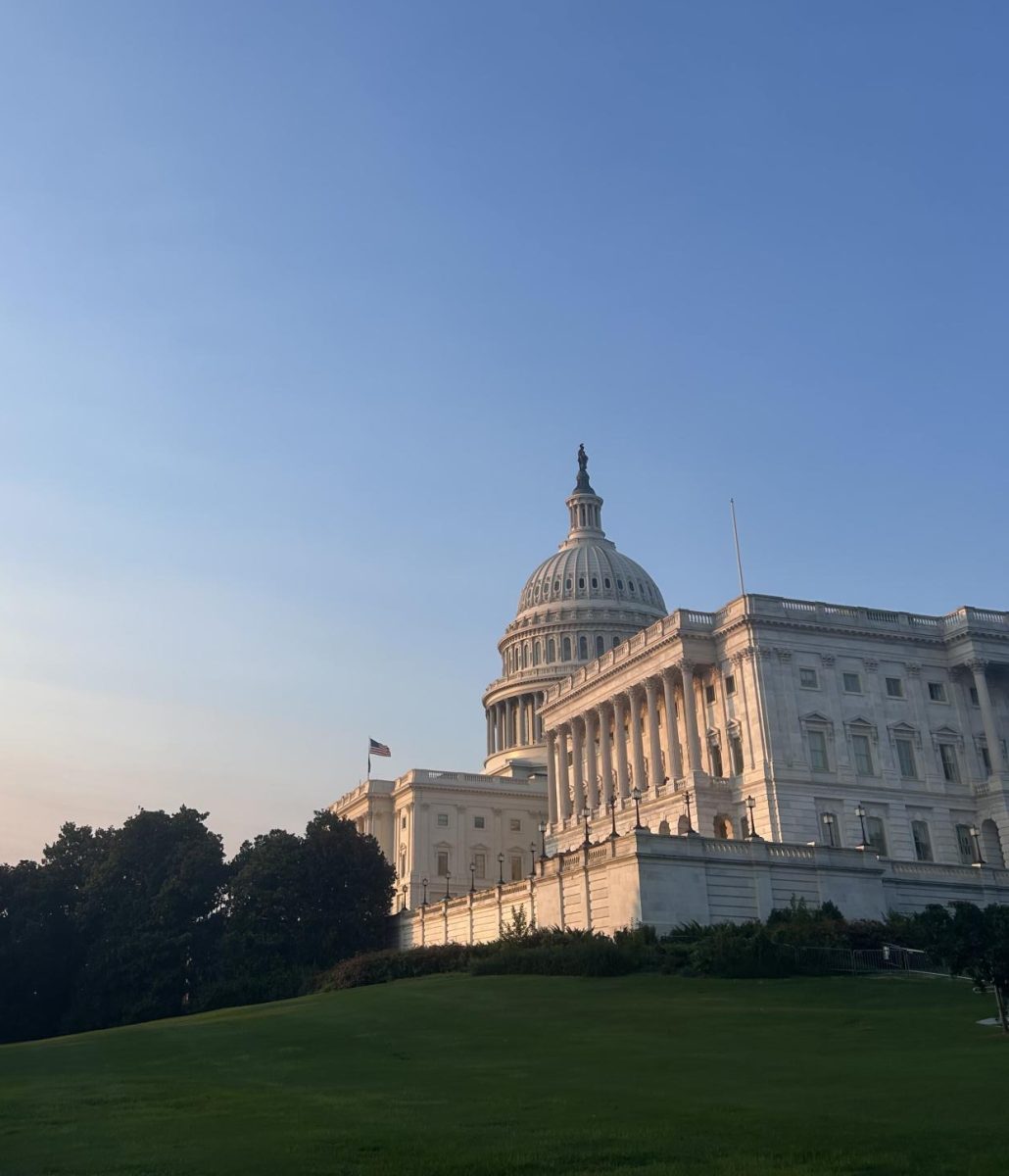
I take great pride in my American roots and being a part of the world’s first true democracy. We are built on the revolutionaries who fought the mighty British monarchy for a beautiful dream: that the common man might have a chance at political freedoms. That dream has spread around the world because of their bravery.
I fear, however, that our country is in the midst of real democratic backsliding. And it is not the result of a single political party, but rather the entire system as a whole. The way I see it, our nation far more resembles a plutocracy: a government by and for the wealthy, where ruling elites dominate both economic and political power. We are in a second Gilded Age, during which wealth is becoming increasingly concentrated at the top.
This ruling class is not ordinary wealth as we know it. It’s not your average “rich guy,” or even “mega rich guy.” I estimate the ruling class is roughly 300 individuals, which equates to the 1% of the 1% of the 1% in terms of net worth. Those with ordinary wealth benefit from the shots called by this class.
The concentration of wealth has given the ruling class immense economic and political power. Because our system of government relies so heavily on campaign financing, the concentration of wealth gives economic elites a critical advantage in the political realm: the power of the dollar. They can either run for office or finance their own campaign. Or they force politicians to rely on them for campaign financing, promising that their economic and political policy interests will be effectively implemented. Economic elites now finance many lobbyists and think tanks to rally support for the policies that benefit them.
Additionally, they maintain a tight grip on mainstream media, propping up only the politicians who fit their agendas. I wonder whether average citizens truly have free political choice if the options presented to them have already been carefully selected. Do they genuinely hold independent policy views if many of those views are shaped by large media conglomerates such as MSNBC or Fox News? If so much of the information environment is curated, I believe we should ask whether autonomous political thought is becoming an illusion.
I do not see this wealth concentration and subsequent political power going anywhere. AI will only speed up this process, a point made by Humanities Professor Eugene McCarraher in his recent on-campus lecture, Why AI Doesn’t Love You and Never Will.
“The chief danger of AI is not an imperialism of sentient machines,” McCarraher said. “It’s rather unchecked financial speculation, and the centralization of data, money and power in the hands of the few corporations and the state, acting in cahoots to exploit and police an increasingly powerless and demoralized populace.”
AI will exacerbate the wealth disparity and numb the masses to that reality. The ruling class will soon begin cutting their number one cost of production, human labor and justify mass unemployment by implementing Universal Basic Income (UBI). UBI could effectively raise an individual’s income from $50,000 to $100,000 while eliminating the need to work. This may seem appealing. But this dynamic will give far more power to the elites. The masses will become docile while the ruling class’s net worth increases, reinforcing the economic/political cycle as mentioned earlier.
I fear that many of our politicians say that they will act in the interests of the common man to secure votes, but then, once in office, act in favor of the ruling class who finance their campaigns. The constant talk of social issues conceals their true intentions. The modern-day Democrats secure votes by tugging on the heartstrings of citizens who consider themselves “good people.” They brand themselves as the party of morality. But then they enact arguably immoral policies, like, for example, supporting the massive offshoring of production in the early 2000s, decimating America’s industrial working class. That didn’t benefit the common man. But it benefited Wall Street. The modern-day Republicans, on the other hand, rely on inflammatory rhetoric to appeal to disenfranchised and angry Americans, or on emotional politics like immigration issues, branding themselves as America First. The recent tariffs have given many the illusion that Trump deeply cares about the working class. The working class might actually benefit from tariffs, but these benefits are not Trump’s core motivations. I believe he’s partnering with America’s industrial elites and strengthening the executive branch to consolidate power. He’s not a dictator. But could he be an authoritarian idealist?
The war on Iran is significant evidence that we live in a plutocracy. President Trump and Pete Hegseth are going to brand this war as being about human rights, the prevention of nuclear weapons and/or the war on terrorism. If this were the case, though, we’d be attacking North Korea, Eritrea, Turkmenistan, Syria, Myanmar, Belarus and the countless other oppressive regimes across the world. Could the prioritization of Iran, particularly in relation to U.S. support for Israel, be influenced mostly by the role that political funding and lobbying play in shaping American foreign policy decisions? Check out trackaipac.com. You will quickly see how there are only a handful of politicians who do not take money from Israel.
It’s worth mentioning that our plutocratic system may also be intertwined with a broader elite blackmail network. In this scenario, figures like Trump could act in the interests of the plutocracy not only because it benefits them personally, but also because they are constrained by blackmail. It is a mutually reinforcing dynamic that discourages deviation from elite interests. I wouldn’t completely rule it out. The Epstein files, both their content and intentional suppression, continue to horrify me.
It’s certainly not looking good. I may not be an optimist, but I do have hope, a sentiment also championed by Professor McCarraher. In the first Gilded Age, large social movements, such as the Labor Movement, produced the Sherman Anti-Trust Act. Fighting back is in the DNA of our nation, all the way back to 1776.
I am hopeful in two regards, the first being the rise of figures like James Fishback and Zohran Mamdani. Fishback is a Republican candidate for governor in Florida. He has faced an uphill battle thus far against the Trump-backed and financially loaded Byron Donalds. Yet, despite being underfunded, he’s going to win. Social media has created a rift in the campaign financing system that supports the plutocratic paradigm. This has allowed politicians like Fishback to reach youth free of charge, without binding themselves to the interests of the elites. Mamdani beat the establishment this way, too. As it currently stands, I am an independent who evaluates purely based on genuine intent and honesty that benefits the average American. I am hopeful, given the increased popularity of freelance YouTube journalists like Andrew Callaghan and Tommy G. These men represent a real shift away from mainstream media, allowing real critical political thought to exist unrestrained.
We are entering a pivotal moment of American politics. The masses are certainly becoming more aware of how the system has begun to function. What we do with this information lies in the hearts and virtues of the upcoming generation. Will we submit to the interests of the ruling elite, or fight for the democracy that we deserve?


