
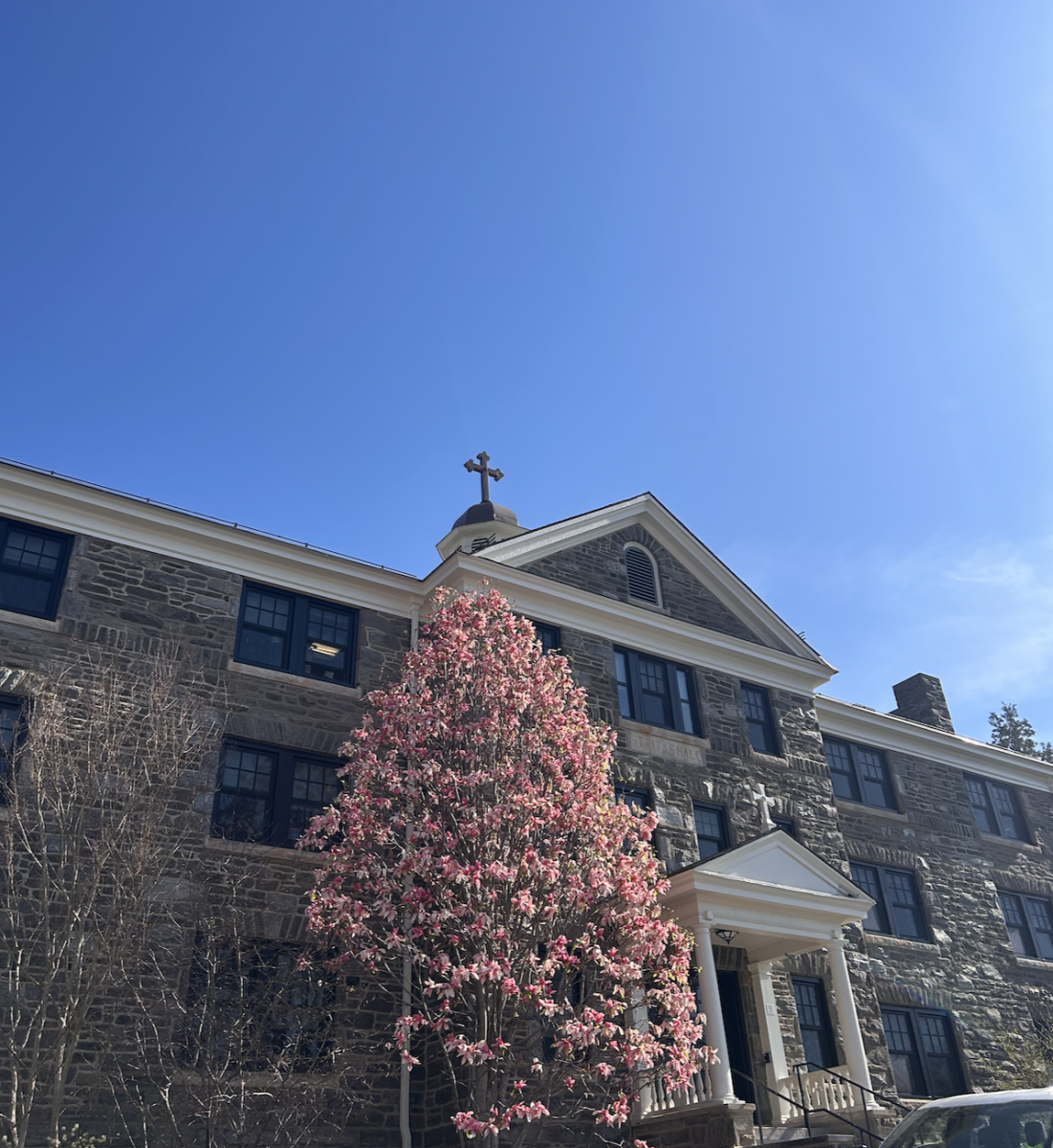
Villanova’s Department of Theology and Religious Studies has seen a staggering increase in undergraduate enrollment recently, with the numbers up 500% from three years ago. This trend raises questions of why so many students have taken an interest in theology. Is this pattern specific to Villanova, or could it be part of a wider trend as Gen Z is speculated to be invoking a “quiet religious revival”?
First, studying religion at Villanova presents many appealing opportunities. Dr. Brett Grainger, Director of Undergraduate Studies in Theology & Religious Studies, stated that the department has flourished for several reasons. Notably, the theology department has focused on promoting its resources to students, as it is the largest program in the College of Liberal Arts and Sciences in terms of faculty and courses available.
Grainger described the paths students can pursue with a theology major or minor.
“A theology degree allows you to do anything and gives students fluid skills for a variety of careers,” Grainger said.
Students often pair theology with degrees like political science to explore the connection between the two subjects, or couple it with a distinct major like engineering to “flex a different part of their brain.”
Nabeel Jafar, a freshman Peace and Justice Studies major with a secondary major in Theology and Religious Studies, is interested in comparative religion. He has always been fascinated with world religions. Pursuing these interests at Villanova, Jafar hopes to write a compelling senior thesis on a neglected topic in religious academic research and plans to attend law school upon graduation.
Beyond Villanova, Grainger points to young people showing a remarkable interest in religion across the globe
“Gen Z is more curious and open to religion, as opposed to earlier generations like millennials,” Grainger said.
Grainger suggested that factors like global crises and increasing uncertainty accompanying the rise of artificial intelligence force youth to ask deep questions such as “what am I for, and what jobs are going to be left for me?” Theology and religion, Grainger persists, are the natural place to address such questions.
Caelan Barker, a sophomore communications major, recently added Theology & Culture as her secondary major because she felt it would allow her to “explore her fascination with the human experience,” delve into life’s major questions and examine religion in the broader context of society.
As interest in studying religion has grown, universities are at the forefront of Gen Z’s subtle religious revival, with church attendance reportedly rising on college campuses worldwide. Mat Verghese, Director of Liturgy in the Office for Mission and Ministry, reports that Villanova’s church attendance is starting to exceed pre-COVID levels.
Verghese oversees the Order of Christian Initiation Process at Villanova and has witnessed the program quadruple in size over the past three years, with students at different stages of their sacramental journeys pursuing initiation. He noted this trend is consistent with peer institutions, highlighting that the University of Notre Dame had more than 100 people in its Christian initiation program this year.
Verghese also commented on the contributions of alumni Pope Leo XIV to the recent boom of religion at Villanova.
“There is an elevated excitement in the air and still, honestly, a spirit of disbelief,” Verghese said. “How is it possible that someone so close to the Augustinians and to the University is the pope?”
While especially prevalent at Villanova, Pope Leo’s leadership exerts impact far beyond his alma mater. Promoting a united church that seeks peace and justice for all, Pope Leo projects positivity and hope, encouraging young people to turn to the church for stability and comfort in today’s polarized society.
Furthermore, religion appears to be especially prevalent in Gen Z due to the heavy influence of social media. Jafar, a practicing Muslim since birth, noticed that both his Muslim and non-Muslim friends have started to care more about religion in recent years.
“My Instagram Reels feed has a lot of Islamic content, and I’ll see it liked by friends of mine and even people of other faiths,” Jafar said. “I also see Christian and Catholic content being reposted by some of my hometown friends on TikTok, which might seem trivial, but I think it shows that younger people do care and want to be open about their faith.”
From the classroom to the church, Villanovans have clearly demonstrated increased interest in religion in the past few years, seemingly consistent with a religious revival among youth worldwide. Many Villanova students are looking to the study of theology and religion to deepen their cultural understanding, while youth everywhere are simultaneously turning to their faith in times of uncertainty.


