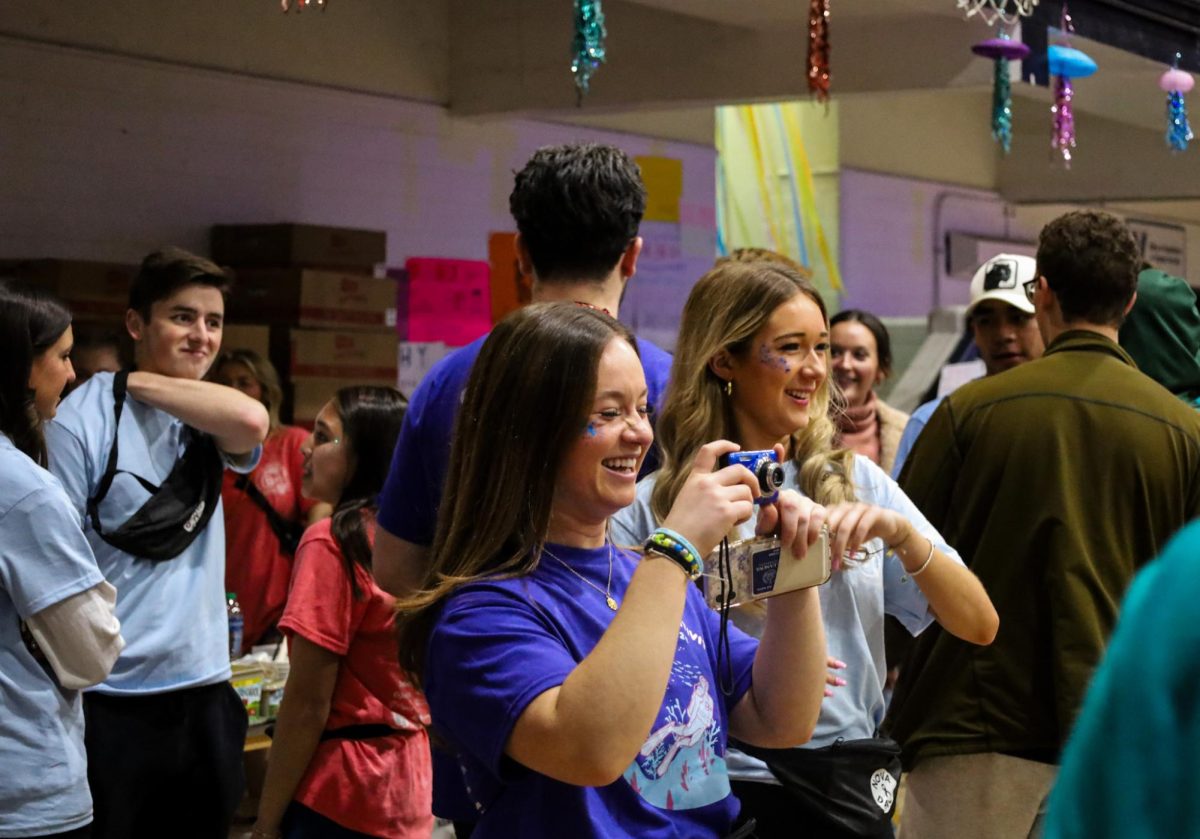
The week of NOVAdance’s annual dance marathon has finally arrived, and students are taking the “Be Positive” motto to heart. NOVAdance is a quintessential aspect of the culture at Villanova, fostering kindness, hope and community, all values inspired by Andrew McDonough.
The Villanovan spoke with Joe McDonough, Andrew’s father and the founder of the Andrew McDonough B+ Foundation, about his son and the impact his legacy continues to have on others.
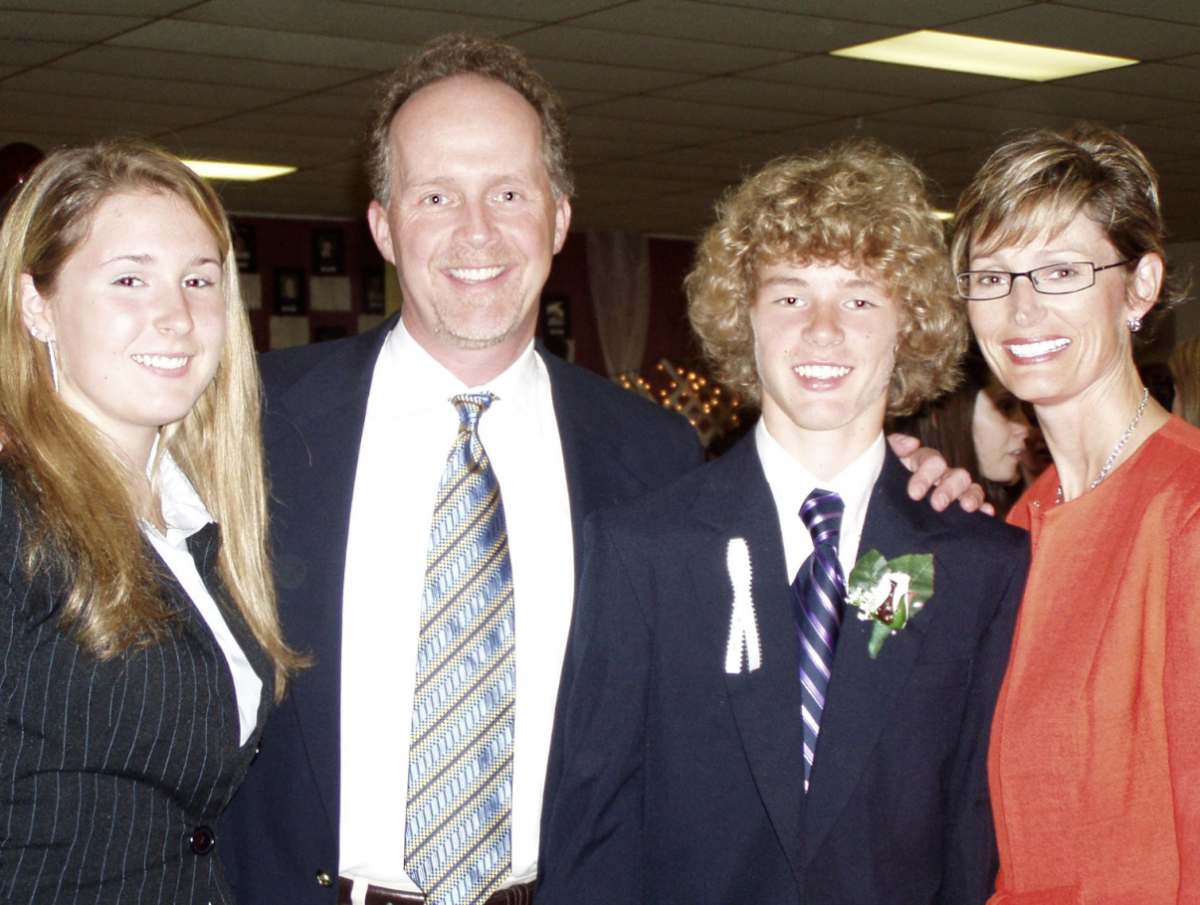
Joe McDonough had dreamt of being a father his entire life. Alongside his wife, Kris, McDonough raised his oldest daughter, Allie, and youngest son, Andrew.
“Well, what more could I want?” McDonough asked. “The things that were important to me were not my title, the car I drove, or the size of my house. For me, partly because of my upbringing, it was all about family. I couldn’t wait to be a dad and coach sports and help him with homework and all that kind of stuff.”
While nearly two years apart in age, Allie and Andrew were so close that they were often mistaken for twins.
“I had two great kids,” McDonough shared. “Not perfect kids. I mean, you know, just, I had the life I wanted. And both kids were good in school, they were athletic, but most importantly, they loved each other. They were just so close.”
At the beginning of a January weekend in 2007, Andrew led his soccer team to a state championship. A mere two days later, the McDonough’s found themselves at the Wilmington Children’s hospital.
While originally believed to be a case of Appendicitis, doctors eventually informed the McDonoughs that Andrew had Leukemia. Joe broke the news to his son.
“He asked me two questions,” McDonough shared, “He said, ‘Can I shave my head before my hair falls out?’ And he says, ‘What do I tell my friends?’ And I said, ‘Just go tell them the truth. You didn’t do anything wrong.’”
Following the diagnosis, Andrew went into septic shock and later cardiac arrest.
“I knew in my core, that if Andrew heard me begging him to keep fighting, he would,” McDonough recalled. “And they resuscitated Andrew. I pulled the doctor aside, and I said, ‘Is my son gonna be okay?’ And he looked at me, he said, ‘Your son will not live through the night.’”
McDonough could only describe the night as a nightmare, but the family was determined to do everything they could to save Andrew.
“And I looked at him,” McDonough said, “I told him, ‘Only God and Andrew knows.’”
Andrew did live through that night, which was the start of a 167 day hospitalization period. During these 166 “bonus days,” as Joe refers to them, Andrew went through over 50 surgical procedures and had several strokes. On four separate occasions, the family was informed Andrew would not live to see the next day.
The McDonoughs did not want anyone to give up on Andrew. Inspired by his blood type, B+, his protective older sister Allie plastered a sign on the door that read, “Do not come in this room unless you’re going to be positive.” The family put an image of Andrew before his diagnosis by his bedside to serve as a reminder of who they were fighting to save.
On day 165, July 12, 2007, Andrew had his fourth stroke, and the doctor told his family he had less than 48 hours to live.
“My birthday was the next day,” McDonough said. “And Kris and Allie will tell you that Andrew fought to stay alive so as not to die on my birthday. Someday, hopefully, I’ll ask him if that was true. And the following day, on the 14th of July, 2007, at 1:55 p.m. in Wilmington, Delaware, after everything my son went through, all the operations, the strokes, the intubations, everything, I watched Andrew take his last breath and die in his 16 year old sister’s arms.”
Following his son’s passing, Joe McDonough left his previous career and established the Andrew McDonough B+ Foundation. Driven by the mission to “live like Andrew,” schools like Villanova have established chapters of the B+ Foundation across the country.
McDonough describes Andrew as an energetic, thoughtful 14-year-old who never missed a chance to help a friend in need or make someone else smile. When describing his son’s personality, he likes to tell the story of a time he dropped Andrew off at a friend’s house and Andrew ran back to the car just to give his dad a kiss and a “thank you.” Years later, McDonough fondly recalls the moment with a beaming smile.
“But it’s those little things, and they’re lasting,” McDonough said. “You do that, you hold the door, or you help somebody, you start a ripple effect, and then they may do something for someone else. You know, I don’t know why Andrew gave me that gift that day. When he came over and kissed me and said, ‘I love you, Dad, thanks for bringing me up here. I’ll see you at five.’ I mean, I was on top of the world, and I can’t remember, but I was probably nicer to Kris, and, for all I know, maybe Allie did something nice for Andrew earlier that day that started that chain. And, you know, negativity is contagious, but so is positivity.”
Built on the values Andrew lived by, the foundation is now the largest provider of financial assistance to families of kids with cancer in the United States.
”When we help these families, we don’t just pay a bill,” McDonough said. “We show them that someone out there cares about them, we send them love and hope. I know how scary and lonely it can be in the hospital for 167 days, and that’s what you all enable us to do, is to lift these families up and in some cases, literally save their lives.”
McDonough explained that grants to families may go towards rent or housing, keeping immunocompromised kids in a clean environment and preventing them from getting ill. Donations can also go towards funding life-altering research, a priority of the foundation this past year.
DIPG, or Diffuse Intrinsic Pontine Glioma, is a rare tumor of the brain stem. Currently, the survival rate is 0%, and those diagnosed are often afforded 11 months to live.
Fundraising efforts by the B+ Foundation have made strides in changing this bleak reality. At Seattle Children’s hospital, patient Gavin was diagnosed with DIPG nearly three and a half years ago and is still alive thanks to this critical research.
“Now, you could say, ‘Well, that’s okay, so that’s two and a half years more than he should,’” McDonough explained. “Yes, that’s two and a half more years. And as a dad, if you could just give me two and a half more years of Andrew.”
NOVAdance and the B+ Foundation also bring joy into the lives of children battling cancer on a personal level through the B+ Hero program. McDonough says the story of Villanova B+ Hero Blair Henry is a testament to the impact these pairings can have on both the hero and the college students, who form a special bond with one another.
When four-year-old Blair joined the B+ Hero program, she was very sick with a brain tumor. Doctors had given her short time to live, and Delta Gamma adopted her with this understanding. In her final months, Blair’s relationship with her “sisters” brought immense joy into her life and the lives of her parents. The students created lasting memories with Blair, including attending her birthday party and spending valuable time with her family.
“When each one of us dedicates ourselves individually to making a difference in someone’s life, it’s amazing what we can do,” McDonough reflected. “You know, this was a child that ultimately passed away at a very, very young age, but a bunch of college students who did not know her at all before we made this connection changed the life that she had for that short life and gave her parents a reason to smile. And I can almost guarantee that every one of those Delta Gamma sisters that got to know her will carry a piece of Blair with them forever. When they’re my age, they’ll remember that little girl Blair that just put a stamp on their heart.”
McDonough emphasized the depth of these connections by sharing another story of a B+ hero at New York University. A group of fraternity brothers gave him a bid, placed him within their composite and were there in the hospital holding his hand in his final moments. The child’s mom personally invited them.
“That’s the power.” McDonough said. “It’s not just, you know, sending them a birthday card. This is a real human connection, 365 days, and long term.”
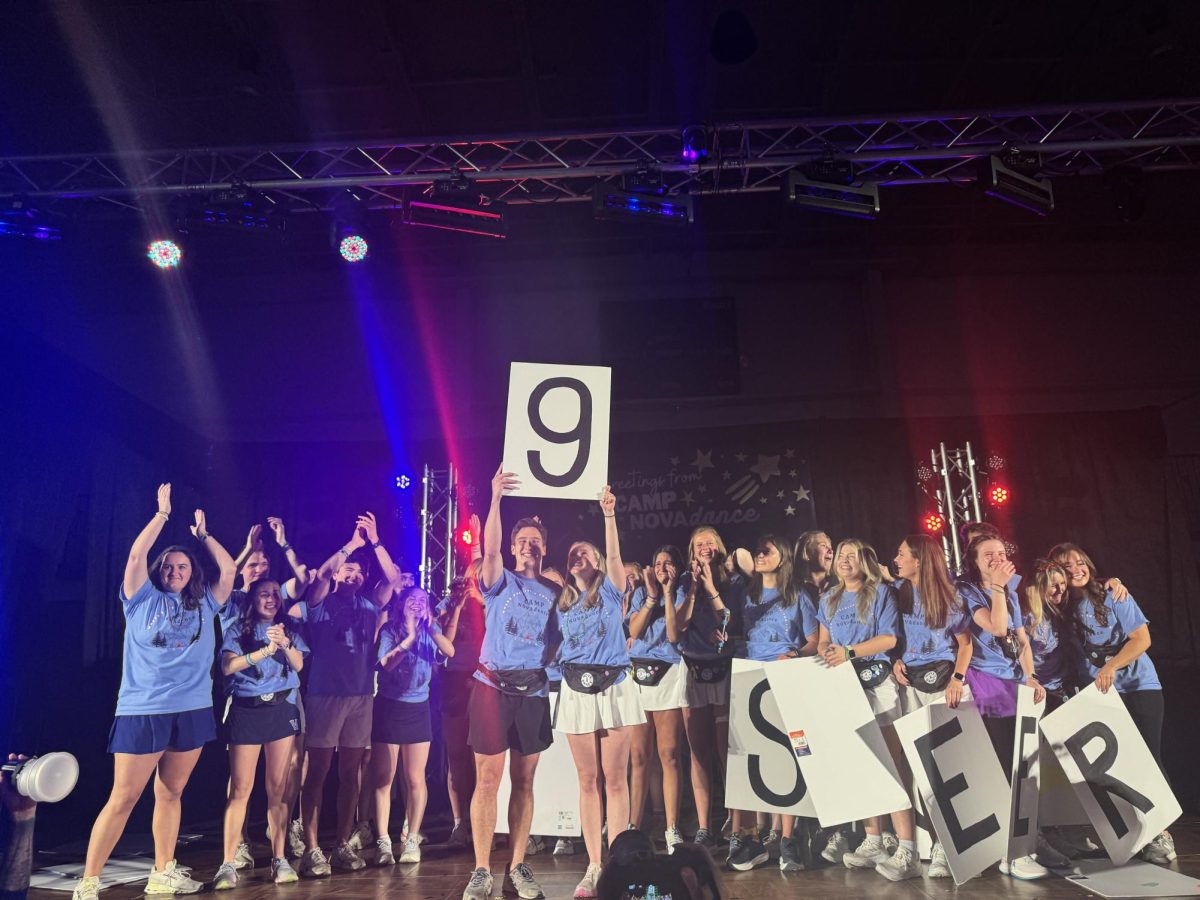
Last year, NOVAdance took a leap in making its fundraising goal public. After a year of fundraising efforts, the chapter broke over $700,000, a historic milestone. This year, the fundraising goal has been shared across campus again, and NOVAdance gears up for the marathon hoping to jump another $100,000 to an $800,000 total.
“I’m telling you for sure,” McDonough said, “Villanova’s gonna hit a million someday. And that seems insane.”
McDonough applauded this goal-setting but went on to remind students of the importance of having fun and looking at the bigger picture of progress. To do so, McDonough shared a personal anecdote about Andrew’s own goal to attain a 4.0 GPA during his first year of high school, one that he accomplished.
While proud of his son, McDonough shared that he was far more impressed by Andrew setting a goal rather than the accomplishment itself. Each dollar, regardless of whether it amounts to the lofty target NOVAdance is aiming for, ultimately results in a family helped.
This year, Andrew McDonough would have turned 33. Years after his passing, his legacy continues to brighten the world and make an impact on so many.
“When he was little, he always said he was gonna be famous,” McDonough said. “And we thought, like, you know, baseball player, play for the Phillies or something. And, I guess in a way, Andrew has become famous. Never did I think it was going to be this way.”
“I think his heart would be broken that so many other kids have had cancer and so many kids have died,” McDonough continued. “But I think he would be just stunned that a foundation that bears his name is one of the largest child cancer charities in the country and that his foundation raises millions of dollars in funds of research and I think he’d be happy about that. Andrew’s a kind soul, and I think Andrew would feel like, if I had to die, I wish I was the last one, and hopefully my death can make it better for other kids.”