
We’re often told that college is where we’ll “find ourselves,” yet few pause to ask what that really means. Is the goal of “finding ourselves” even attainable? The phrase has been repeated countless times, and it’s almost lost meaning, echoing through graduation speeches and freshman orientations alike. Yet perhaps we’ve misunderstood this phrase from the start. Maybe college isn’t about “finding ourselves” at all, but about listening to a quiet call that’s been resounding within us all along.
The term vocation traces back to the Latin vocare, meaning “to call.” A vocation, therefore, isn’t something we find externally or create anew, but something we discover from within. It’s a voice that has accompanied us along our deepest struggles and greatest triumphs, and will continue to whisper until our final breath.
In this light, college becomes a place of discovery, rather than invention. In other words, we don’t spend four years with our noses buried in books just to emerge confused about who we are. Rather, we learn, wrestle and grow. Not to write our lives from scratch, but to discern and embrace the direction in which we have been quietly steered.
And yet, this transformative process is rarely neat. There are plenty of late nights filled with doubt, long days when we feel as if we are walking in circles, and moments when everything seems to contradict itself. But these moments matter. They shape us just as much as our triumphs do. College isn’t merely a straight line toward certainty. It’s a winding path full of hurdles that teach us the virtues of patience, humility and self-understanding.
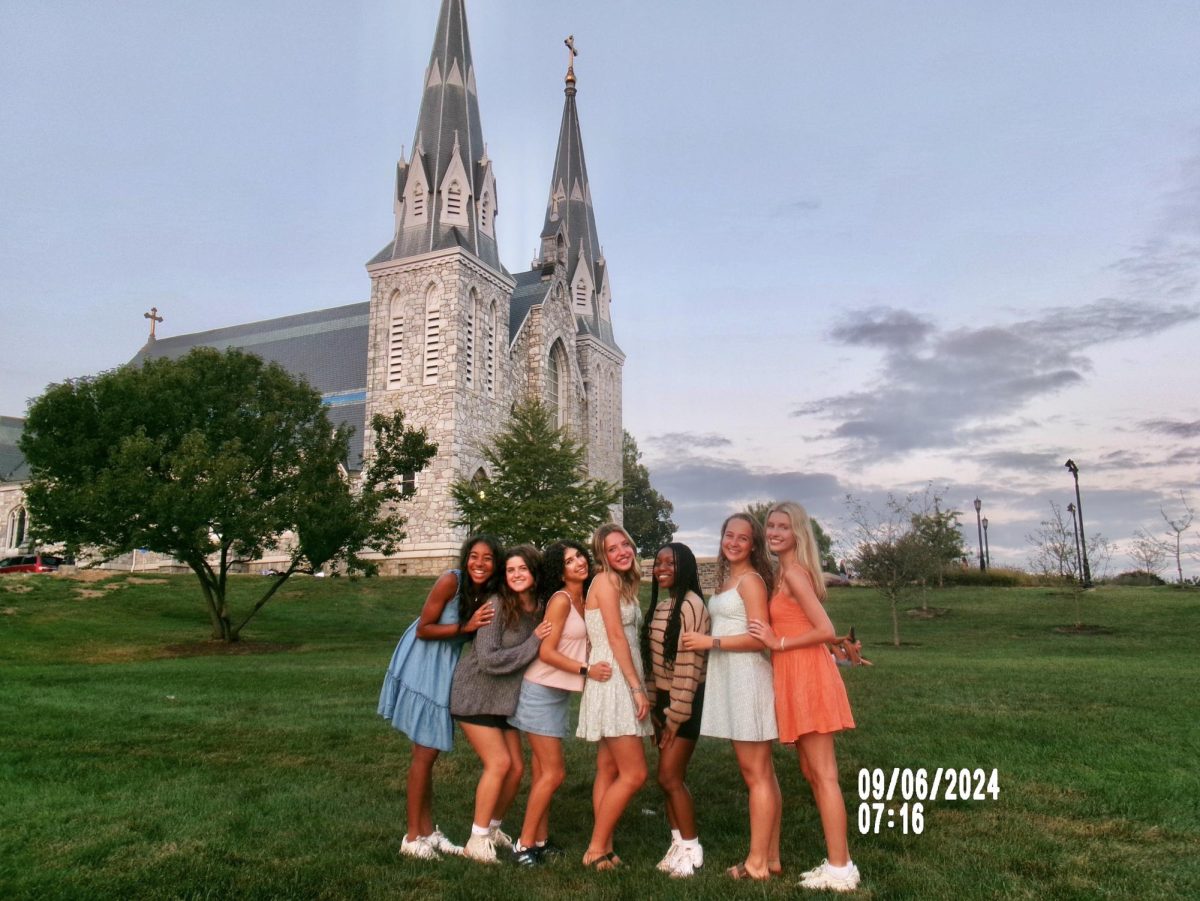
Every Villanovan, whether in nursing, engineering, business or liberal arts, shares in this common pursuit. We are all, in some way, on a pilgrimage of becoming. St. Augustine reminds us to “become what we are not yet,” and that is precisely what Villanova calls us to do. This university does not offer mere education. It offers transformation.
The three pillars of Villanova (veritas, unitas, caritas) are not decorative mottos tucked away on a brochure; they are living stages of vocation that we are called to experience. We must seek the truth so that we may know who we are. To pursue unity so that we belong to something greater than ourselves. To love others and share our gifts with all. When we view our classes, friendships and even our imperfections through this lens, college shifts from self-construction to conversion. Once more, we are not starting from scratch, but transforming from within. The pieces are already present, we must learn to connect them.
Nowadays, we picture vocation as a dramatic “aha moment,” a cloud of purpose revealed through a single internship, a mentor or a class that suddenly changes one’s view of everything. Yet, vocation is rarely loud. More often, it develops quietly, pecking as a woodpecker at the rhythms of daily life. Vocation demands persistence, requiring a constant state of quietening oneself to hear the call that never fails to hum. The voice of vocation appears in the discipline of studies, the patience of group projects, the vulnerability of friendship and the humility of doubt.
Thus, perhaps “finding yourself” isn’t about reaching a final answer, but about learning to dwell within the question. College, then, is not a four-year quest for identity, but a period of contemplation and active listening.
So, the next time someone tells you that you’ll “find yourself” in college, you might smile and reply, “I’m not trying to find myself. I’m learning to listen.”


